
Mark T.'s 72-Hour Downfall: A Cautionary Tale of Cloned Cards
Have you ever wondered how quickly a seemingly anonymous darknet purchase of cloned cards can unravel under ATM surveillance? Mark T. from Tampa Bay discovered this the hard way in November 2024 after
- First published:
- Author: Miles Carter
- 14 minutes
Skip ahead
- Have you considered how carding chains actually operate from theft to cash?
- What makes modern ATMs such powerful witnesses against fraud?
- How did the entire investigation unfold in such a short time?
- What do the concrete numbers from this case reveal?
- Why could even Monero not keep his identity hidden?
- Which specific errors turned a simple purchase into a federal conviction?
- What practical takeaways should security minded readers remember?
- Can you see why caution beats any promise of easy money?
- Sources
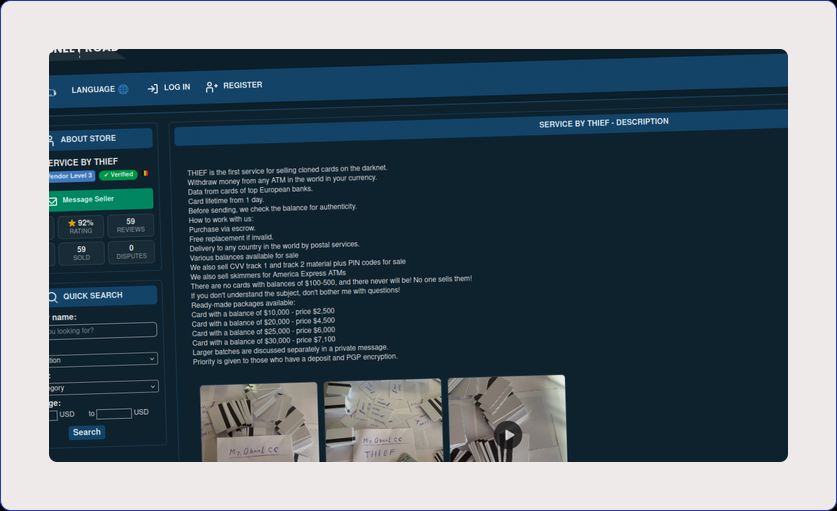
The belief that acquiring cloned cards on the dark web guarantees privacy can be misleading, as one individual's experience reveals a different reality. It was Mark T., a resident of Tampa Bay, Florida, aged 34, who was thought to have uncovered a reliable method for earning illegal profits. He exchanged cryptocurrency for a set of cloned debit cards, complete with their corresponding PINs, on a clandestine online platform. Unfortunately, a swift chain of events led law enforcement directly to him, highlighting the vulnerability of anonymity in the dark web carding world. This situation illustrates that despite utilizing measures like Monero, concrete evidence from ATMs can ultimately determine the fate of buyers.
Have you given thought to embarking on a similar path? Prior to proceeding, it’s essential to thoroughly inspect ATMs for any potential skimming devices and be mindful of indicators that could signal their existence. Have you pondered whether your actions might leave behind traces that cryptocurrency cannot conceal? The answer lies in the interplay of surveillance footage, transaction records, and digital traces that connected him back to his activities in less than two weeks.
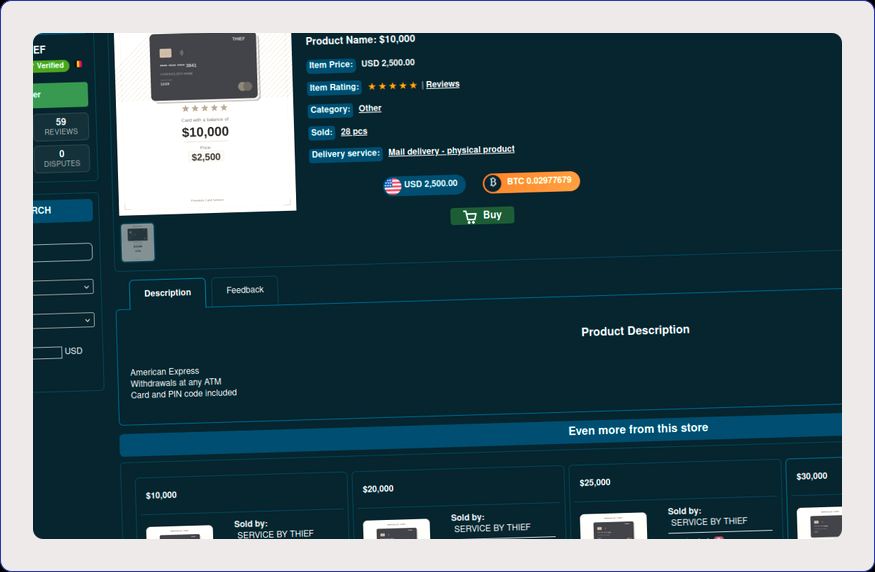
In November 2024, he allocated $480 in cryptocurrency to obtain six cloned debit cards, which included their PINs, from a dark web marketplace. These cards contained data from actual accounts, allowing him to withdraw $4,200 from three different ATMs before his activities were abruptly interrupted by his arrest at the fourth ATM.
Mark completed his purchase on the website where the purchase was made, opting for Monero specifically because it is harder to follow.
Quick summary
ATM cameras recording clear facial images at 1080p combined with transaction logs can identify suspects within days through official databases.
Purchasing privacy coins like Monero on KYC exchanges creates a traceable link that investigators can obtain via court order.
Concentrated withdrawals near your home address trigger anti-fraud systems immediately regardless of crypto used.
Keeping physical items such as blank cards, MSR devices and laptops with Tor history provides direct evidence during searches.
Learning how to check for credit card skimmers and using a credit card skimmer protector offers practical everyday protection against similar risks.
Have you considered how carding chains actually operate from theft to cash?
Understanding how carding operations function from theft to cash is crucial, isn’t it? This insight allows you to identify potential weaknesses in the system. Initially, criminals acquire magnetic stripe data, referred to as track one and track two, through skimming devices placed on ATMs or via other illicit means, including data breaches. They subsequently imprint this data onto standard plastic cards, complete with embossed letters to imitate authentic cards. If they also manage to capture a PIN—often using covert cameras or overlay devices—the cards become primed for use at ATMs.
In this scenario, our subject Mark attempts to withdraw cash before the legitimate account holders can react and freeze their accounts. Eventually, any cash he retrieves may be converted into cryptocurrency via various exchanges to obscure its origin. Mark made his purchase using Monero, a cryptocurrency chosen for its anonymity, and received the cards in unremarkable packaging. Initially, everything appeared to proceed without a hitch. However, he failed to consider that each ATM functions as more than just a cash dispenser; it collects evidence, including facial recognition and timestamps for every transaction.
Before you delve into discussions about cloned cards on Reddit or similar forums, ensure that you have a credit card skimmer protector set up on your accounts. Have you verified if your bank provides features to protect against card skimming? A brief check could prevent complications later on. Mark managed to execute four successful withdrawals, amassing a total of 4900 dollars from various locations nearby, but during the last transaction, he unwittingly left behind information that would ultimately lead to his downfall.
What makes modern ATMs such powerful witnesses against fraud?
Have you ever thought about why many people perceive ATMs as basic machines when they are, in fact, sophisticated evidence-gathering devices? Within most units, there exists a main camera that captures images at a stunning 1080p resolution, frequently enhanced by infrared capabilities for darker settings. Additionally, a number of models house a concealed camera from a different angle, which remains unnoticed by users. Each transaction generates a detailed log that records the exact time, the sum withdrawn, the specifics of the card used, the unique ATM ID, and the outcome of the transaction.
These machines also document their geographic location and transmit network information to banking processors, forming a comprehensive overview. When Mark reached the fourth ATM in a serene suburb of Tampa Bay, he didn’t attempt to hide his identity. The camera captured a clear image of him without any disguise, whether it be a mask, glasses, or hat. Those twenty-three seconds of film became crucial evidence, illustrating how swiftly tangible proof can surpass online anonymity. Offenders often mistakenly believe that purchases made on the darknet offer complete protection, but an ATM transforms digital activities into traceable incidents that expose that illusion.
Before using any ATM, it would be prudent to understand how to identify a skimming device attached to a card reader. A credit card skimmer detector can assist in spotting unusual attachments, and examining images of ATM skimmers beforehand can help you recognise typical designs. Have you thought about adding a skimmer protector to your wallet as a basic precaution against card skimming? These small measures can be more significant than you might initially think.
How did the entire investigation unfold in such a short time?
It may come as a surprise how quickly a few complaints can escalate into a federal investigation, particularly when patterns emerge swiftly. Reports of unauthorized withdrawals emerged from three individuals in Florida, Georgia, and North Carolina on November 1, 2024. The cards affected were promptly blocked by their banks, which also communicated the information to an early fraud detection network.
By the third day, automated systems had already spotted a repeating pattern of cloned card use across states within a brief window, triggering an internal alert. The matter moved to the bank's specialist investigation team. Two days later, on day five, the case reached the U.S. Secret Service, the agency responsible for these financial offences. Analysts requested complete records from every involved ATM, including all video material.
A clear image of an individual’s face was captured by footage from the fourth ATM eight days after the initial reports. By cross-referencing a clear image captured from the fourth ATM footage with state records, Mark T. was identified as having no prior criminal history. Simultaneously, it was indicated by transaction logs that all withdrawals occurred within a radius of forty miles from his home. By the twelfth day, investigators had obtained a warrant for browser records, internet service provider logs, and cryptocurrency transactions. The provider confirmed connections to Tor exit nodes during times that aligned with the purchases. Court orders targeting the exchange where Mark acquired his Monero linked the wallet directly to the darknet marketplace transaction.
On day fourteen a search warrant was granted for his property. Officers found six blank plastic cards, a magnetic stripe read and write device, a laptop containing Tor Browser history and visits to darknet marketplaces, 3200 dollars in cash, and the original shipping materials. The following day Mark was taken into custody. During the interrogation, it was acknowledged by him that the cards were purchased, and four out of the six were successfully cashed out; however, the banks had already blocked the last two attempts. This timeline, spanning only fifteen days from first withdrawal to arrest, demonstrates how connected the systems truly are.
Before proceeding with any similar ideas, you should create a personal checklist. Before you explore carding forums dark web, ensure that you have researched credit card skimming protection options thoroughly. Before testing any cash machine, confirm you know how to check for credit card skimmers using both visual inspection and, if possible, a dedicated credit card skimming device detector. Taking these precautions could prevent you from repeating the same oversights.
What do the concrete numbers from this case reveal?
Have you ever considered how concrete figures can convey the true extent of costs more effectively than vague warnings? In total, Mark made four withdrawals, accumulating 4900 dollars in cash. He spent 480 dollars in cryptocurrency to acquire a set of six cards. Just fifteen days elapsed from his initial withdrawal until his arrest. Ultimately, he received a federal prison sentence lasting five years, which equals sixty months. Additionally, he was faced with a hefty financial penalty comprising a 22000 dollar fine and restitution, along with an obligation of three years under supervised release following his imprisonment.
These facts illustrate how an attempt to make quick money can lead to significant losses, both in terms of liberty and finances. Once banks intervened, the remaining two cards became ineffective, serving as a reminder that haste does not always benefit the user. This highlights why some individuals engage in discussions about cloned cards on platforms like Reddit, seeking more positive outcomes, even as similar cases continue to arise. Even advanced cf card cloning techniques used in preparation were no match for the surveillance systems installed at each ATM.
Before making any purchases, take a moment to reflect and run through a mental checklist. Ensure you are fully aware of the risks associated with acquiring items from darknet markets. Also, verify your understanding of how to check for card skimming devices at ATMs. Being prepared in advance can help you sidestep the pitfalls that ensnared Mark so swiftly.
Why could even Monero not keep his identity hidden?
You may assume that choosing a privacy focused cryptocurrency like Monero would break any investigative chain, yet this case proved otherwise. Mark bought the Monero through a centralised exchange that required full KYC verification, including his passport scan and a selfie. When investigators obtained a court order, that exchange handed over his identity details along with the exact transaction information. Although the later movement of Monero itself is complicated to follow, the purchase date, amount and destination created a clear connection to the marketplace buy.
The narrow time window added further weight. Everything from acquiring the Monero, completing the marketplace order, receiving the cards by post and making the ATM withdrawals happened inside two weeks. Such tight overlaps became compelling circumstantial evidence when presented together. Physical items discovered during the house search provided direct proof that no digital currency could erase. The seized cards carried magnetic tracks that matched exactly the stolen data from the real account holders. Combined with the clear ATM video of his face, these elements formed a case that left little room for doubt.
Even perfect execution elsewhere would have stumbled on that video evidence, which cannot be laundered or hidden. You should therefore treat any thoughts of using similar services with extreme caution. Have you asked yourself whether your own crypto purchases could be traced back through entry points? A credit card skimmer protector on your personal cards offers far more immediate safety than hoping dark web transactions stay invisible forever. Learning card skimming reddit cautionary tales might also reinforce why these risks outweigh any short term gains.
Which specific errors turned a simple purchase into a federal conviction?
Have you reflected on how small choices can cascade into major consequences within days? Mark made several decisions that accelerated his identification. First, he carried out all four withdrawals inside a forty mile radius of his own home address. Anti fraud algorithms notice such concentrated geographic patterns immediately and raise flags. Second, he appeared on camera with no disguise at all, no mask, no hat and no glasses, allowing a direct match against official databases.
Third, purchasing Monero on a KYC exchange directly tied his legal identity to the cryptocurrency later spent on the marketplace. Fourth, he kept every piece of evidence inside his apartment. The blank cards, the magnetic stripe reader writer, the laptop with Tor history and even the original packaging were all recovered during the search. Digital traces often remain even after attempts to delete them, as browser records and system logs can reveal usage patterns.
Fifth, the 3200 dollars in cash found at his address matched the exact denominations that ATMs had dispensed, strengthening the link. Sixth, he completed everything at high speed within two weeks. Spreading activity over months might have delayed detection, although the cameras would still have recorded each visit. These points together explain why the case moved from complaint to conviction so efficiently.
Before engaging in any carding-related activities, it's crucial to conduct a comprehensive self-assessment. Prior to visiting dark web carding forums, ensure you have researched every potential tracing method. Before considering any cloned cards, verify that you know how to identify credit card skimmers at every location you might use. Proper preparation could assist you in avoiding these exact mistakes.
What practical takeaways should security minded readers remember?
You might wonder what this individual story offers to those working in protection roles rather than crime. Several clear points stand out for anyone responsible for defence. Bank side anti fraud systems act as the initial barrier, using pattern recognition, location based rules and scoring to catch anomalies automatically long before staff become involved. Continuing to develop machine learning tools for spotting unusual behaviour remains essential.
Physical evidence and digital records must be examined together. The ATM video provided the face, but only the transaction log told investigators precisely which second to review. Merging these information streams forms the basis of strong cases. So called anonymous currencies still carry risks at both the entry exchange requiring KYC and the final cash out stage, meaning complete separation from identity is rarely achieved.
Customer awareness continues to be an area needing attention. The faster victims report suspicious activity, the sooner banks can block cards and limit losses. Regular education campaigns reduce the window that buyers like Mark can exploit. You should therefore view every report of fraud as an opportunity to strengthen the overall chain.
Have you considered how these principles apply to your own environment? A credit card skimming protection strategy that includes both technology and user training delivers better results than relying on any single measure. Teaching people to recognise potential threats and to use a credit card skimmer protector where possible helps close gaps that criminals target.
Can you see why caution beats any promise of easy money?
In March 2025, charges including fraud related to access devices under 18 U.S.C. § 1029 and money laundering under 18 U.S.C. § 1957 were pleaded guilty to by Mark T. The United States District Court for the Middle District of Florida handed down a sentence of sixty months in federal prison, followed by three years of supervised release, a 22000 dollar fine and full restitution to the three affected victims. The judge remarked that the most immediate consequences are often faced by the last participant, who, in this case, was Mark, despite his role being that of the end user rather than the mastermind behind the larger operation.
This entire sequence from purchase to sentencing in less than five months shows how interconnected surveillance, banking systems and law enforcement have become. Even though organisers further up the chain may evade capture longer, buyers remain exposed at the cash point where anonymity dissolves. You now have a detailed view of exactly what occurred, the precise timeline, all the numbers involved and the reasons crypto failed to shield him. Perhaps the strongest reminder is that no matter how carefully planned, one clear video frame combined with digital records can end the story abruptly.
Before you exit this page, take a moment to reflect on your own habits. Ensure you know how to detect if there is a card skimmer on any machine you approach. Think about whether you carry a credit card skimming device detector while traveling. Simple routines like these, along with staying informed through legitimate channels instead of dark web carding forums, can help you remain on the right side of these issues. The case of Mark T. ultimately demonstrates that the physical world often catches up with digital decisions faster than many anticipate.
Sources
[1] Card Skimmers - Florida Department of Agriculture & Consumer Services
[2] Public Advisory ATM & Point-of-Sale Skimming
[3] Credit Card Skimming | Georgia Attorney General's Consumer Protection Division
 Dark Web Links List: Your Essential ResourceExplore our curated dark web links list for safe navigation, featuring updated .onion sites across various categories.
 Examples of the Dark Web: What to ExpectExplore examples of the dark web, from illicit marketplaces to forums, and understand what to expect when navigating this hidden online spa…
 Best Onion Websites for Safe BrowsingDiscover the best onion websites for safe browsing, ensuring your privacy and security while exploring the dark web.