
How Derek H. Attempted to Cash in With Counterfeit Money
Derek H. discovered the hard way that trying to deposit counterfeit money can lead to severe legal consequences, as he faced arrest within weeks of his scheme's start.
- First published:
- Author: Miles Carter
- 2 minutes
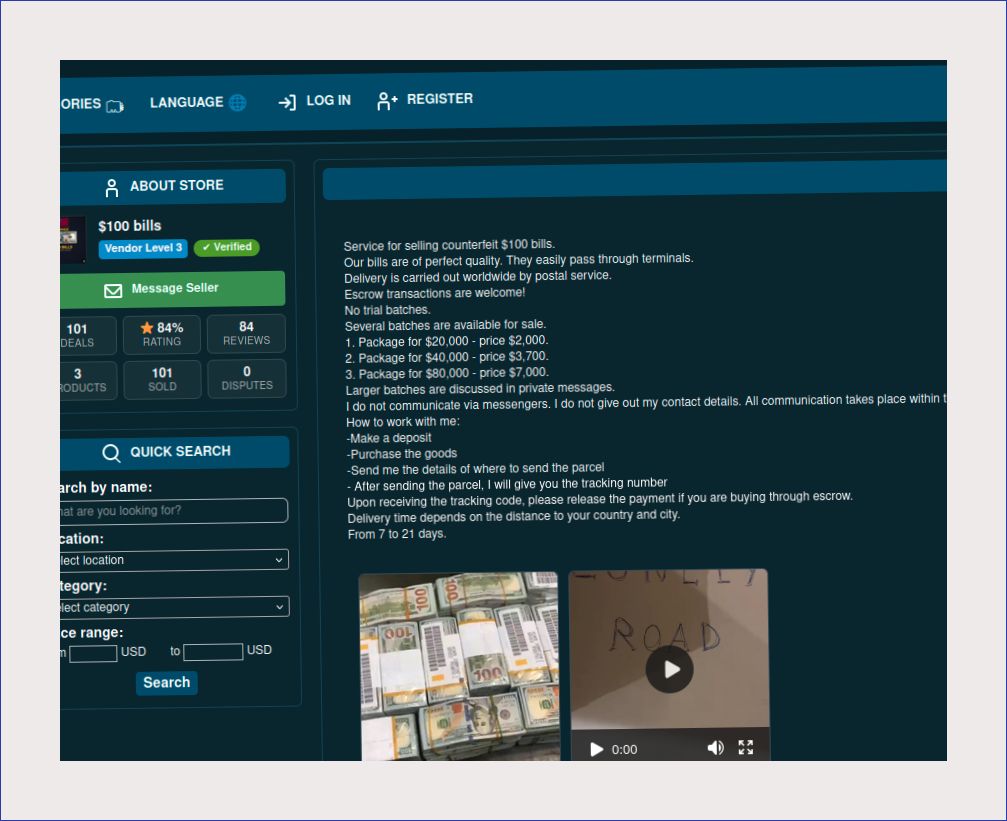
In early 2025, a man aged 29, Derek H. from Denver, thought he had uncovered a profitable opportunity. He invested $1,200 in cryptocurrency to purchase 40 counterfeit $100 notes from a darknet seller, who claimed these notes closely resembled real currency. The plan was simple: to use cash-accepting ATMs to convert these phony notes into legitimate funds. At first, Derek experienced success with the initial two machines, managing to extract cash. However, complications soon emerged. Just three weeks later, his actions caught the attention of law enforcement, leading to his eventual arrest.
What matters
Derek purchased counterfeit $100 bills for $1,200.
Initial ATM deposits were successful until the third bank flagged a bill.
His account was frozen, leading to his arrest by U.S. Secret Service.
Banks use advanced technology to detect counterfeit money.
Engaging in counterfeiting can have severe legal repercussions.
The Counterfeit Cash Scheme
Derek H. obtained 40 fake $100 notes (2009 series) for $1,200 through cryptocurrency transactions.
The vendor assured him that these notes were virtually identical to real currency, emphasising features such as UV protection and a magnetic strip.
Keen on making a profit, he approached several ATMs to deposit his counterfeit cash.
Initially, two ATMs accepted the notes smoothly, enabling him to deposit $800 into his account. However, issues arose when the third ATM flagged one of the notes. The fourth machine attempted to process the transaction but left it pending, which raised alarms. The following morning, Derek found out that his bank account had been frozen.
These events quickly spiralled into his arrest, demonstrating how swiftly circumstances can deteriorate when one engages in illicit financial activities.
Consequences of the Scheme
Derek's transformation from an eager investor to a felon occurred rapidly. The moment his account became inaccessible, the authorities quickly reacted. This prompts an interesting inquiry: How do financial institutions detect fraudulent activities?
Banks utilise advanced techniques to spot counterfeit currency, including:
High-tech scanners that reveal inconsistencies in the paper and print quality.
Systems that monitor transactions for irregular patterns, like significant cash deposits.
Partnerships with law enforcement to scrutinise questionable transactions.
In Derek's situation, the combination of an unusual transaction and the ensuing account freeze demonstrated the bank's proactive stance and dedication to thwarting fraud.
The Dangers of Counterfeiting
Derek H.'s experience serves as a cautionary tale about the risks associated with counterfeit money schemes. Although he believed he could outsmart the system, law enforcement and banking safeguards quickly revealed the reality of his actions. If you're considering engaging in similar activities, remember that the consequences can be severe, including arrest and prosecution. It's crucial to think twice before attempting to turn fake dollars into real cash.
Derek made his purchase on a darknet marketplace, illustrating the risks of dealing with counterfeit money.
Sources
[1] Quick Glance Reference Card | U.S. Currency Education Program
[2] How to Authenticate U.S. Currency
[3] Cashier Toolkit | U.S. Currency Education Program
[4] Learn How to Spot Fake Money Before it Reaches Your Wallet | United States Secret Service
 Torch Tor Link: Accessing Resources EffectivelyDiscover how to access the Torch Tor link effectively and explore a wealth of resources available on the Tor network.
 Real Deep Web Videos: What to ExpectExplore real deep web videos and discover what to expect, including their nature, content types, and safety tips for viewing them.
 Dark Web IP: Understanding Its RoleLearn how your IP address interacts with the dark web and the steps to protect your identity online.